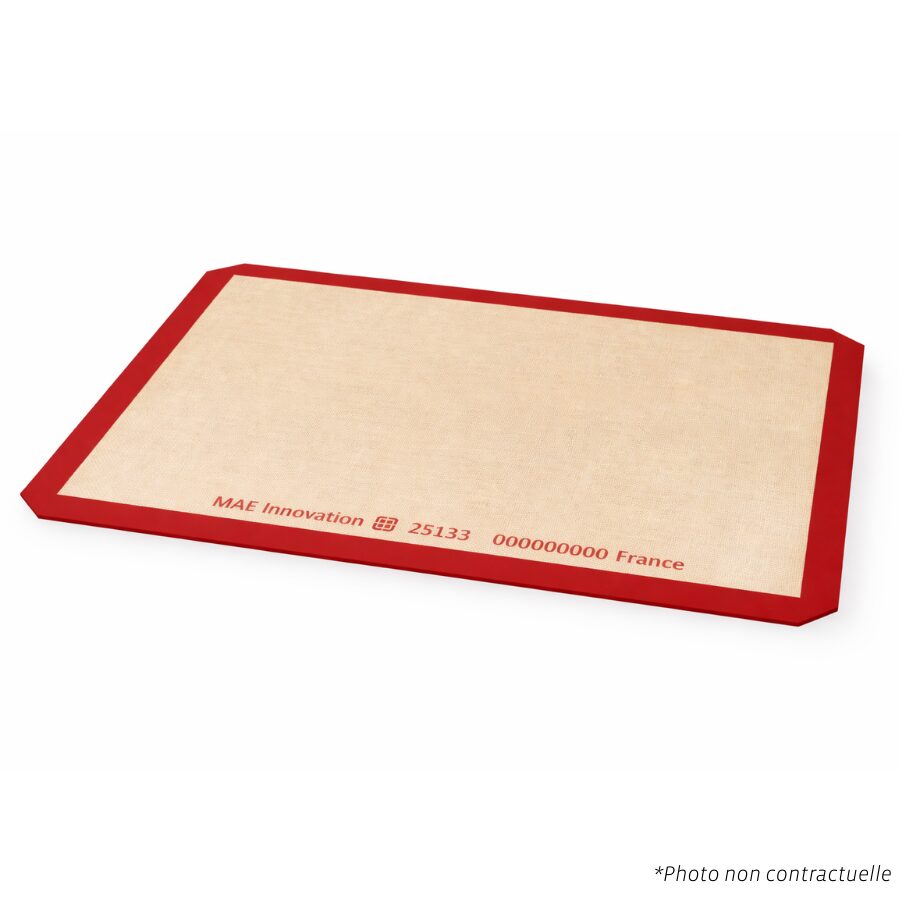

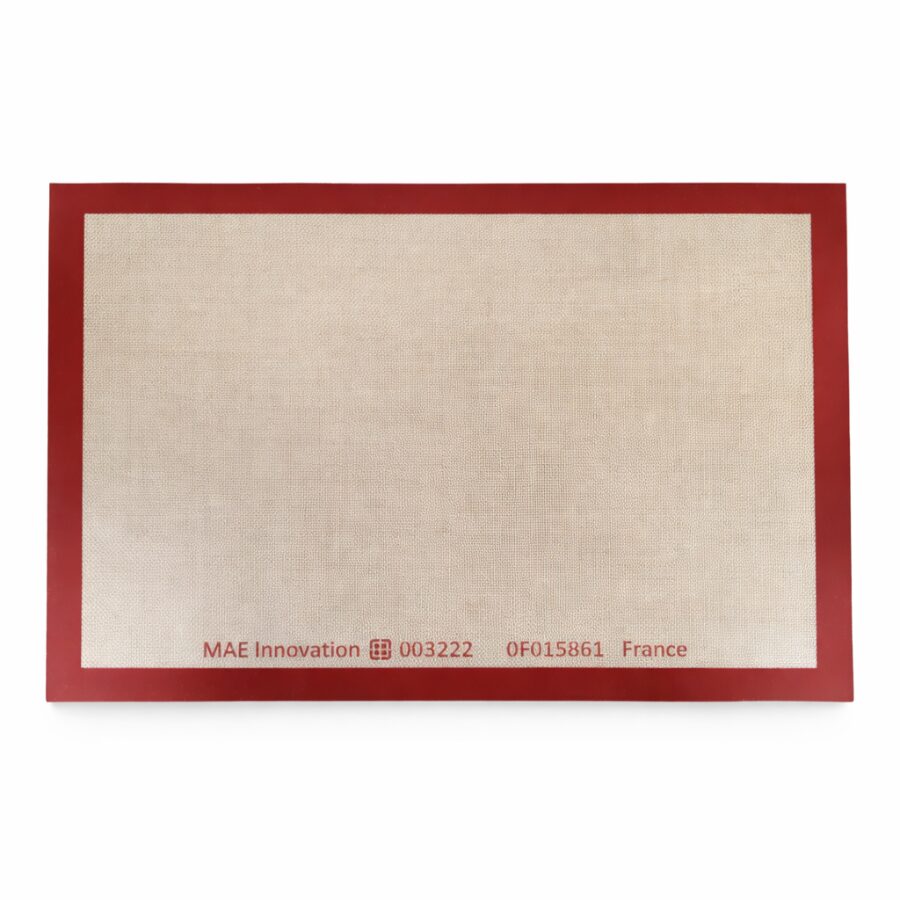
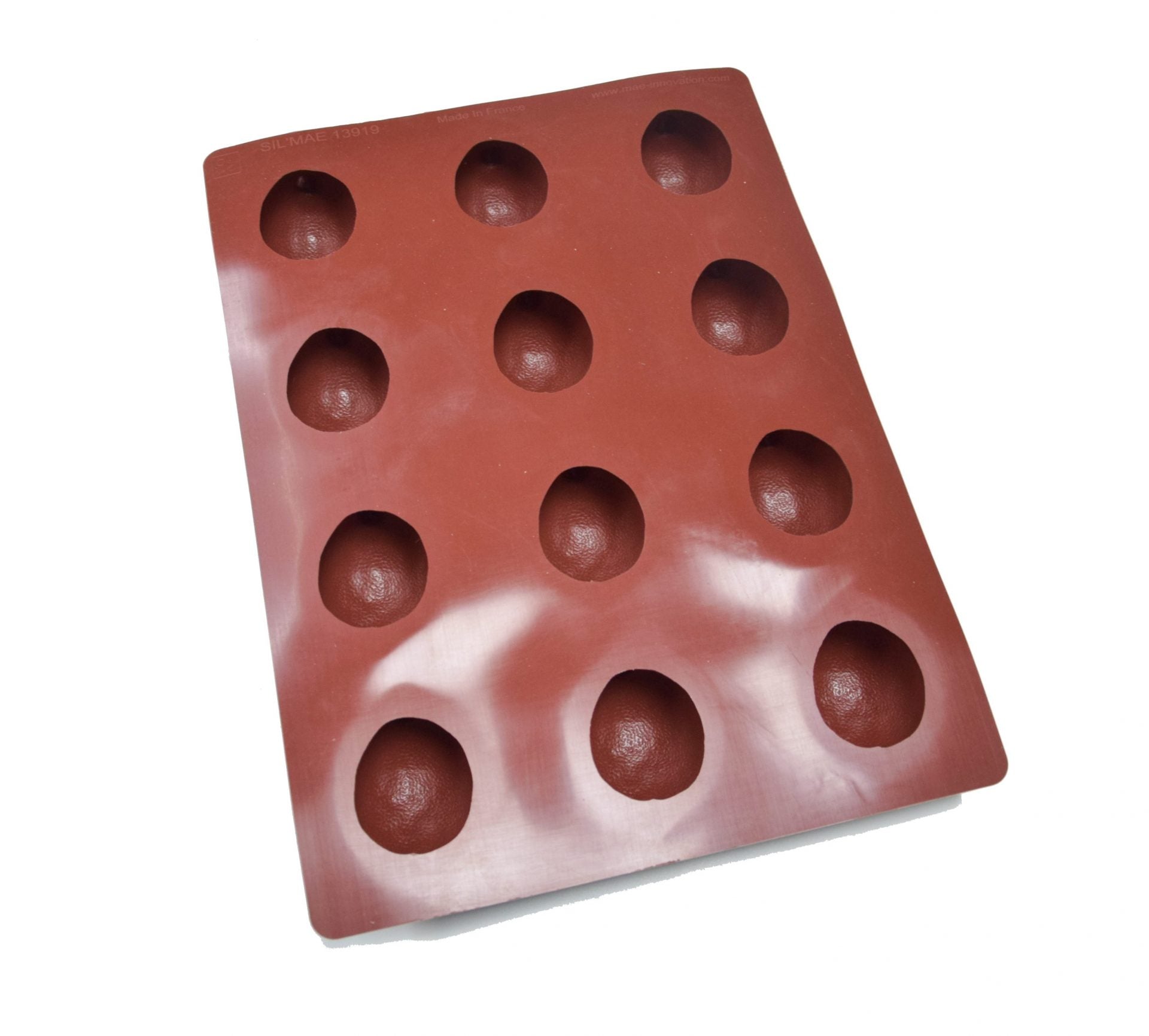


In short: the closest true replacement for a Demarle mold is not the one that looks most similar in a product photo. It comes down to five things a real evaluation should cover: how the silicone is cured, whether the supplier can speak to the actual regulatory standard behind the material, the temperature range across your full production cycle, cavity to cavity consistency, and the true cost of the mold once you account for how long it actually lasts. This guide walks through all five, along with a practical framework for switching suppliers without disrupting production, and where our Silmaé line, made by the French manufacturer Maé Innovation, fits into that comparison.

Why This Decision Matters More Than It Looks
Many professional kitchens built entire sections of their production around Demarle molds for years, not because the brand was flashy, but because the molds simply did their job. Clean release, consistent shape, no surprises during a Tuesday morning production run. That kind of reliability is easy to take for granted until it disappears, and then a decision that used to be automatic becomes something a kitchen has to actually think through.
We hear from a growing number of bakers and pastry chefs who are now comparing their options for a Demarle mold replacement. Some are dealing with limited availability. Others are auditing their supply chain and want to know, in concrete terms, what a genuinely equivalent mold looks like on paper rather than in marketing copy. This guide walks through the Baking Atelier Mold Evaluation Framework, the same set of questions we apply ourselves before we agree to carry any new product line, not a generic checklist assembled for a blog post.
Start With What You Are Actually Comparing
If you talk to enough mold suppliers, you will notice that almost everyone says "premium silicone" or "food grade silicone." Almost nobody explains what that actually means, and the gap between those two phrases and real performance is bigger than most kitchens realize.
Not all food grade silicone is equal. In the United States, food contact silicone generally needs to meet the FDA's 21 CFR 177.2600 standard, which governs rubber articles intended for repeated use in contact with food. Meeting that baseline is table stakes, not a differentiator. A basic mixing spatula and a professional grade mold can both technically clear that bar while performing completely differently in a working kitchen. If a supplier's only pitch is that their silicone is "FDA approved," ask what else they can tell you, because that claim alone tells you almost nothing about durability, release quality, or how the mold will behave after six months of daily use.
Cure type is the detail that actually separates grades of silicone. Silicone can be cured with peroxide or with platinum. Peroxide cured silicone is cheaper to produce, but it can carry a slight chemical odor after baking and tends to degrade faster under repeated heat cycling. Platinum cured silicone costs more to manufacture, but it is more stable, more heat resistant, and does not carry that residual odor into your product. It is also naturally bacteriostatic, meaning bacteria do not readily grow on its surface, which is worth knowing if your kitchen documents supplier standards for its own health inspections or third party audits.
Our Silmaé molds are platinum cured, not peroxide cured. If a supplier cannot immediately tell you which cure type their silicone uses, that is usually a sign they are reselling a generic mold rather than working with a manufacturer who controls their own production from raw material to finished piece.
The Regulatory Questions Worth Asking Any Supplier
Because so much of this category runs on vague reassurance rather than specifics, it is worth knowing what the actual standards are, both so you can evaluate us and so you can evaluate anyone else you are considering.
In the US food equipment world, two organizations tend to come up. The FDA sets the baseline chemical safety standard for food contact materials under 21 CFR 177.2600. NSF International runs a separate certification system, and NSF/ANSI 51 specifically addresses materials used in the construction of commercial food equipment. Beyond that, NSF P393 sets minimum safety requirements for retail bakeware, including silicone bakeware, covering material safety, cleanability, and performance.
Here is the honest picture for our own line. Our Silmaé molds are manufactured in France and comply with EU food contact material regulations, which is the regulatory framework that governs materials manufactured in the EU. We are not going to claim a specific US certification, like NSF listing, that we have not independently confirmed for this product line, and we would rather tell you that plainly than let a vague claim sit on the page unchallenged. What we would tell any kitchen evaluating a supplier, us included, is this: ask directly which specific standard a product is certified against, ask for documentation rather than a verbal assurance, and treat a supplier's willingness to answer specifically as a signal in itself.
Four More Things To Check Before You Commit
Cure type and regulatory clarity are the two most overlooked details. Once those are settled, four more factors determine whether a mold will actually hold up in daily production.
Temperature range across your full cycle. A mold needs to survive your actual process, not just the oven. Our Silmaé silicone is built to handle both deep freezing and a fully loaded professional oven without breaking down over repeated cycles, though the exact rating can vary by specific mold. If a kitchen freezes product directly in the mold before baking, confirm the precise range for that specific shape with us directly, since this detail matters more than almost anything else on this list.
Cavity to cavity consistency. For financiers, madeleines, or any high volume tray format, even a small variance between cavities throws off portioning and plating consistency across a batch. This comes down to how tightly the manufacturer controls its molding tolerances during production, not just the material used. It is difficult to evaluate this from a photo, which is exactly why a test order matters more than a spec sheet alone.
Manufacturing traceability. Knowing where a mold is actually made, by whom, and under what standard is different from a vague "imported" label. Our molds are made at Maé Innovation's own facility in La Ville aux Dames, France, a manufacturer with more than twenty five years of experience in this exact category, not assembled by an unnamed third party contractor. Maé Innovation also commissions an independent laboratory every year to test its molds, a recurring third party check rather than a one time certification claim made once and never revisited. That is the kind of detail worth asking any supplier about directly, since a single past test tells you far less than an ongoing one.
The real cost of the mold, not just the price on the invoice. This is the factor kitchens weigh least carefully, and it is often the one that matters most.
How To Actually Calculate The Real Cost Of A Mold
A cheaper mold is not automatically the better financial decision, and a kitchen that only compares sticker price is making an incomplete comparison. Three things determine the real cost of a mold over its working life.
Expected lifespan. A peroxide cured mold that needs to be replaced twice as often as a platinum cured one is not actually the cheaper option, even if the upfront price is lower. If a supplier cannot give you a realistic expectation for how many production cycles a mold should handle before performance drops, that is a gap worth noting.
Waste from poor release. A mold with inconsistent release does not just cost you the product that sticks. It costs you the time spent troubleshooting, the inconsistent presentation on plated product, and in some cases, product that has to be discarded entirely. This is difficult to quantify precisely, but any kitchen that has dealt with a bad mold knows the cost is real even when it does not show up as a clean line item.
Downtime during a changeover. Switching mold suppliers without a plan disrupts production far more than the mold itself costs. This is exactly why we recommend the phased testing approach below rather than a full changeover done all at once.
A Practical Framework For Switching Suppliers Without Disrupting Production
A full mold changeover is not something to do overnight, and we would tell you not to attempt it that way even if we benefited from a faster sale.
Step one. Identify the single shape in your current lineup that gets the heaviest daily use. That is the highest value place to test a new supplier first, since it is where a problem would surface fastest and where a genuine improvement would matter most.
Step two. Order that one shape and run it in rotation alongside your existing molds for one full production cycle, not a single trial batch. A single use can hide problems that only show up after repeated cleaning and reheating.
Step three. Evaluate specifically, not generally. Compare release quality, bake time consistency, cleanup time, and how the mold looks after its first full wash cycle, not just how the first bake turned out.
Step four. Only after that test cycle holds up should a kitchen move toward a broader changeover. If the shape you actually need is not available anywhere off the shelf, that test order is also the right moment to start a conversation about a custom mold instead of settling for a close approximation.
How To Care For A Professional Silicone Mold
Switching suppliers is also a good moment to reset how your kitchen handles silicone molds, since improper care is the most common reason a genuinely good mold underperforms.
Store molds flat rather than folded. Folding creates weak points in the silicone over time, and those weak points are usually where a mold fails first. If you are stacking trays, keep them loose rather than compressed under weight.
Clean with hot water and a degreaser rather than scraping the surface with anything sharp or abrasive. A build up of grease, not normal wear, is the most common reason a silicone mold starts to look worn. If molds sit unused for an extended period, sterilizing them before the next use is worth the extra step.
Grease sparingly, if at all. Platinum cured silicone with a genuinely non stick surface does not need oil for most applications. A thin layer during the first few uses, or with recipes that contain very little fat, is usually enough. Over greasing does not improve release. It accelerates aging.
Why Silicone Molds Sometimes Turn White, And Why It Usually Is Not A Defect
This comes up often enough that it deserves its own answer. A white, slightly chalky residue on a silicone mold is almost always grease accumulation, not a manufacturing flaw or a sign the mold is failing. It happens when fat is not fully cleaned off between uses and builds up in the texture of the silicone over time.
The fix is thorough cleaning, not replacement. A proper wash with hot water and a suitable degreasing detergent, done consistently rather than occasionally, generally resolves it. If a kitchen is considering switching suppliers because of this exact issue, it is worth knowing the mold itself is probably not the problem before writing it off entirely.
Why We Carry This Particular Line

The Baking Atelier is the exclusive United States source for Maé Innovation, a French manufacturer with more than twenty five years of experience producing professional silicone molds and bakery equipment. We did not choose them because they were the easiest supplier to reach. We chose them because their manufacturing standard, platinum cured silicone, tight tolerances, and a track record across European professional kitchens, is the closest match to what serious bakeries expect from a mold that has to perform every single day, not just look good in a catalog photo.
We are a boutique sourcing partner rather than a large, generic catalog, which means every product in our Silmaé collection has already been run through the same evaluation framework outlined above, cure type, regulatory clarity, traceability, and real cost, before we agreed to carry it. We are not asking you to trust a claim on a page. We are showing you the same standard we held the product to ourselves.
Matching Your Old Shape To What We Carry

Most kitchens replacing a Demarle mold are not looking for a spec sheet in the abstract. They are trying to match a specific shape they already know, financier, madeleine, savarin and ring molds, half sphere and dome shapes, or flat cavity trays for tuiles and decorative work. Our Molds and Mats collection is organized around these same categories, so a kitchen can generally self match on shape and cavity count without needing a formal cross reference chart.
If you know the exact cavity count and dimensions of your previous mold, that is the fastest way to confirm a real match rather than an approximate one. Send us those measurements through our Contact page before you order, and we will confirm the closest equivalent directly rather than leaving you to guess from a product photo.
When Nothing In Our Standard Catalog Is An Exact Match
Sometimes a specific shape a kitchen relied on for years simply does not have an identical off the shelf match anywhere, ours included. In that case, custom sourcing is the more accurate answer than settling for close enough.
Maé Innovation has produced tailor made molds for more than twenty five years, built to a kitchen's exact cavity dimensions and existing production equipment. It uses the same platinum cured silicone and the same manufacturing process as our standard catalog, applied to your specific shape instead of a general one.
Common Questions From Bakers Evaluating A Switch
Is a silicone mold really a fair comparison to what I was using before? If your previous mold was also silicone, yes, and the comparison should focus on cure type and tolerance, not just the shape. If you were using a metal or fiberglass mold, the comparison changes, and we can walk you through the Fibermaé and Bakemaé lines instead, which are built for different release and heat properties.
How long should a professional silicone mold actually last? Longevity depends heavily on cure type and how the mold is cleaned and stored. Platinum cured silicone, cared for properly, is built for sustained daily use in a production kitchen rather than occasional home use, though we would rather you judge that through a real test cycle than a number on a page.
Can these molds go directly from the freezer to the oven? Yes. Our silicone is built to handle both deep freezing and a fully loaded professional oven without breaking down. Exact temperature ratings can vary slightly by product, so confirm the specific range for the shape you need through our Contact page before you order.
Do I need to grease a Silmaé mold before baking? In most cases, no. The silicone is naturally non stick. A thin layer of fat during the first few uses, or for very lean recipes, is usually all that is needed.
Is FDA approval enough to know a mold is genuinely professional grade? No, and this is worth understanding clearly. FDA compliance under 21 CFR 177.2600 confirms a material is safe for food contact. It does not confirm cure type, tolerance, or how the mold will perform after months of daily production. Treat it as a baseline requirement, not a quality signal.
What should I ask a supplier before switching to their molds? Ask which cure type their silicone uses, ask for the specific regulatory standard the product complies with rather than a general safety claim, ask about expected lifespan under daily commercial use, and ask whether they manufacture the product themselves or resell it from an unnamed third party.
Next Steps
If you are evaluating a replacement, start with the single highest use shape in your current lineup, order it from our Molds and Mats collection, and test it against your actual production line before committing to a full changeover. If nothing in our standard range fits, contact us directly to discuss a custom mold.
Our team can answer specific questions about cure type, regulatory standards, sizing, or production requirements. Reach out through our Contact page, and we will respond directly, with specifics, not a general reassurance.
